
Key Takeaways
- A dental bridge can replace one or more missing teeth and restore the appearance and function of your smile.
- Bridges are fixed restorations, which means they remain securely in place rather than being removed each day.
- Replacing missing teeth can help prevent neighboring teeth from shifting and causing changes to your bite.
- Traditional, cantilever, Maryland, and implant-supported bridges may be available depending on your individual needs.
- Good brushing, flossing, and routine dental care are essential for protecting a bridge and the teeth supporting it.
- Wave Dental can evaluate missing teeth and recommend a personalized restorative treatment based on your oral health and long-term goals.
In this article
Losing a permanent tooth can affect much more than the appearance of your smile. A missing tooth may change the way you chew, affect your bite, and eventually allow neighboring teeth to move out of their proper positions. Fortunately, modern restorative dentistry offers several ways to replace missing teeth, including a dental bridge. A dental bridge is a fixed restoration designed to fill the space created by one or more missing teeth. Unlike a removable partial denture, a bridge stays securely in place while you eat, speak, and go about your daily activities. When properly designed and maintained, it can provide a natural-looking and functional solution for tooth loss. At Wave Dental, patients can explore restorative dentistry options designed to repair damaged teeth, replace missing teeth, and restore comfortable function. Understanding how dental bridges work is an important first step when considering the best way to restore your smile.
What Is a Dental Bridge?
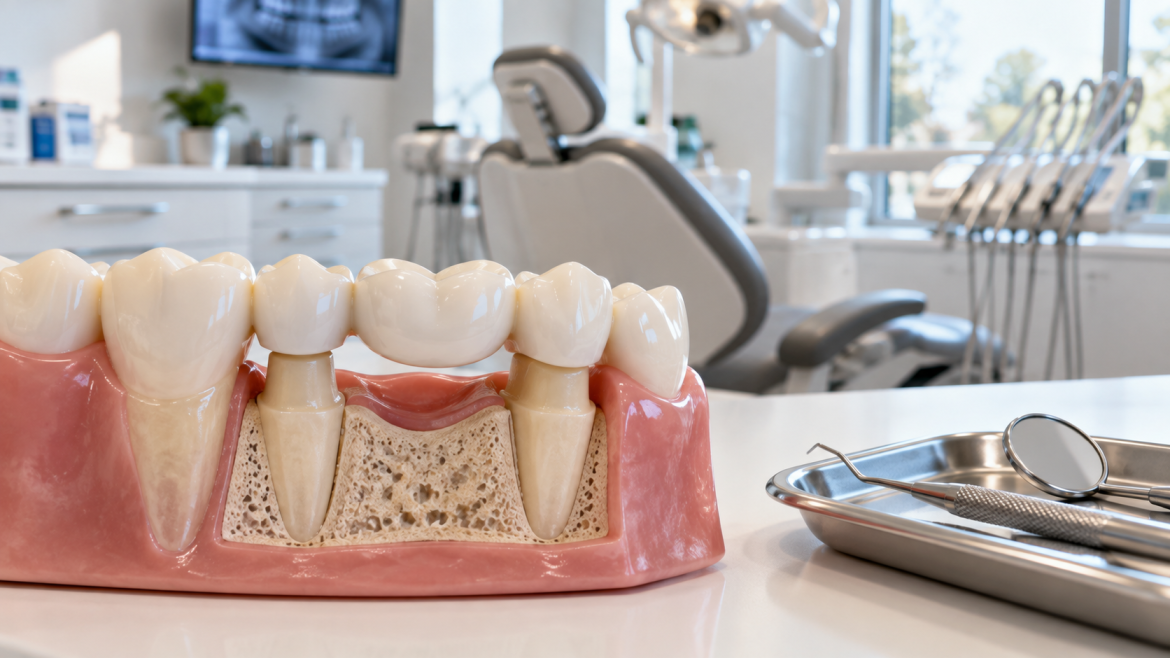
A dental bridge does exactly what its name suggests. It bridges the gap created by one or more missing teeth. A traditional bridge typically consists of two primary components:
- Pontic: The artificial tooth that replaces the missing natural tooth.
- Abutments: The natural teeth or dental implants that support the restoration.
With a traditional bridge, crowns are generally placed on the natural teeth on either side of the gap. These crowns support the artificial tooth positioned between them. The finished restoration is carefully designed to fit comfortably within your bite while closely resembling your natural teeth. Because a bridge is fixed in place, patients do not remove it at night or for cleaning. Instead, it becomes a permanent part of the smile and is cared for along with the natural teeth.
Why Is Replacing a Missing Tooth Important?
It may be tempting to leave a gap alone, particularly when the missing tooth is toward the back of the mouth and cannot easily be seen when smiling. However, each tooth contributes to the overall stability and function of your mouth. Leaving a missing tooth untreated can potentially cause several problems over time.
Neighboring Teeth Can Shift
Your teeth help keep one another properly positioned. When a permanent tooth is lost, the adjacent teeth may gradually tilt or move toward the open space. This movement can contribute to:
- Bite changes
- Uneven spacing
- Difficulty cleaning certain areas
- Increased stress on remaining teeth
- Changes in chewing patterns
Replacing the missing tooth can help maintain appropriate spacing and support a more balanced bite.
Chewing Can Become More Difficult
Molars and premolars perform much of the work involved in breaking down and grinding food. Losing one of these teeth can make chewing on that side of the mouth uncomfortable or inefficient. Some patients compensate by chewing primarily on the opposite side, which can place additional pressure on those teeth. A bridge restores another chewing surface and may help distribute biting forces more evenly.
Speech May Be Affected
Teeth play a role in producing certain sounds. Depending on its location, a missing tooth may change speech or pronunciation. Replacing the tooth can help restore the structures necessary for clearer, more natural speech.
Your Smile Can Change
A visible gap may make some patients feel uncomfortable smiling, speaking, or appearing in photographs. A properly designed bridge fills the space with a restoration shaped and colored to complement the surrounding teeth.
Common Reasons People Lose Teeth
Permanent tooth loss can occur for many different reasons.
Severe Tooth Decay
A cavity that progresses deep into a tooth can eventually cause extensive structural damage. When enough healthy tooth structure remains, the tooth may sometimes be repaired with a filling or crown. When the damage is too severe, extraction may become necessary.
Gum Disease
Advanced periodontal disease damages the tissues and bone responsible for supporting teeth. As the condition progresses, affected teeth can become loose and may eventually be lost.
Dental Injuries
Falls, sports injuries, automobile accidents, and other forms of trauma can fracture or dislodge permanent teeth.
Severely Cracked Teeth
Some cracks can be treated with restorative dentistry. However, a severe fracture extending deeply below the gumline may make a tooth impossible to predictably restore.
Failed or Heavily Restored Teeth
Teeth that have undergone extensive dental treatment may eventually become too compromised to preserve. Regardless of why a tooth has been lost, evaluating replacement options can help protect the function and stability of the rest of the smile.
What Are the Different Types of Dental Bridges?
There is more than one type of dental bridge. The appropriate design depends on factors such as the location of the missing tooth, the health of neighboring teeth, available bone, and bite forces.
Traditional Dental Bridge
A traditional bridge is one of the most commonly recognized designs. An artificial tooth is positioned between dental crowns placed on natural teeth on either side of the gap. For example, if one tooth is missing, the teeth immediately to the left and right may be prepared for crowns. Those crowns then support the replacement tooth between them. Benefits may include:
- Strong support
- Restored chewing function
- Natural-looking results
- A fixed restoration
- Predictable treatment in appropriate cases
One important consideration is that the supporting teeth must be reshaped to accommodate the crowns.
Cantilever Bridge
A cantilever bridge is supported by a tooth on only one side of the missing space. This design may be considered when there is not an appropriate supporting tooth on both sides of the gap. Because biting forces are distributed differently, cantilever bridges are not appropriate for every area of the mouth.
Maryland Bridge
A Maryland bridge typically uses small wings attached to the backs of neighboring teeth rather than full dental crowns. One advantage is that less natural tooth structure may need to be removed. Maryland bridges are commonly considered in certain front-tooth situations where chewing forces may be lower.
Implant-Supported Bridge
An implant-supported bridge relies on dental implants rather than natural teeth for support. This option can be particularly useful when several adjacent teeth are missing. Instead of placing an individual implant for every missing tooth, strategically positioned implants may be able to support a bridge containing several replacement teeth. The appropriate approach depends on factors including bone health, the number and location of missing teeth, medical history, and overall oral health.
Dental Bridge vs. Dental Implant
One of the most common questions patients have is whether they should choose a dental bridge or dental implant. There is no single answer that applies to everyone.
Dental Bridge
A traditional bridge generally:
- Uses neighboring teeth for support
- Does not require implant surgery
- Can replace one or more missing teeth
- Requires preparation of the supporting teeth
- Provides a fixed replacement for missing teeth
Dental Implant
A dental implant:
- Replaces the missing tooth root
- Can avoid placing crowns on healthy neighboring teeth
- Helps stimulate the jawbone in the area of the missing tooth
- Requires adequate bone for placement
- Requires a surgical procedure and healing period
The condition of the neighboring teeth can play an important role in this decision. If adjacent teeth already have large fillings or require crowns, incorporating them into a bridge may make sense. Patients can learn more about dental crowns and restorative treatment when comparing options for repairing or replacing compromised teeth. If neighboring teeth are healthy and otherwise do not require treatment, a dental implant may allow those teeth to remain untouched. A comprehensive dental examination is necessary before determining which approach is appropriate.
Dental Bridge vs. Partial Denture
Another common option for replacing missing teeth is a removable partial denture. The primary difference is that a dental bridge is fixed in place while a partial denture can be removed by the patient.
Both treatments can be useful in appropriate situations. The number of missing teeth, their locations, remaining tooth health, cost considerations, and patient preferences can all influence the recommendation.
What Does Getting a Dental Bridge Involve?
The exact process varies depending on the type of restoration being used. For a traditional dental bridge, treatment generally involves several stages.
1. Comprehensive Examination
Before recommending a bridge, your dentist evaluates:
- Remaining teeth
- Gum health
- Bite
- Bone structure
- Location of the missing tooth
- Existing dental restorations
- Overall oral health
Digital X-rays or other imaging may also be necessary. This examination helps determine whether the teeth surrounding the gap are healthy enough to support a bridge.
2. Preparing the Supporting Teeth
For a traditional bridge, the teeth next to the gap are prepared so they can receive crowns. The dentist carefully reshapes these teeth to create sufficient space for the restoration while preserving as much healthy tooth structure as possible.
3. Taking Impressions or Digital Scans
Precise measurements are required to create a restoration that fits comfortably and aligns correctly with the opposing teeth. Digital scans or traditional impressions may be used to record the shape and position of your teeth.
4. Placing a Temporary Restoration
A temporary bridge may be placed while the permanent restoration is being created. The temporary restoration protects the prepared teeth while helping maintain appearance and function.
5. Placing the Permanent Bridge
Once the final bridge is ready, your dentist evaluates several factors, including:
- Fit
- Bite
- Shape
- Color
- Appearance
- Contact with neighboring teeth
Necessary adjustments can be made before the bridge is permanently secured.
Does Getting a Dental Bridge Hurt?
Dental bridge treatment is generally performed using local anesthesia when natural teeth need to be prepared. This helps keep patients comfortable throughout the procedure. Some temporary sensitivity or mild soreness may occur after treatment, particularly around the prepared teeth or gums. This typically improves as the mouth adjusts to the new restoration. Persistent pain, swelling, or significant bite discomfort should always be evaluated by your dentist.
How Natural Does a Dental Bridge Look?
Modern restorative materials allow dentists to create bridges that closely resemble natural teeth. Several details contribute to the final appearance, including:
- Tooth color
- Shape
- Size
- Translucency
- Gum contours
- Alignment
- Relationship with neighboring teeth
The goal is not simply to fill an empty space. A well-designed bridge should complement the rest of the smile while restoring function.
How Long Does a Dental Bridge Last?
A dental bridge is not necessarily a lifetime restoration, but it can remain functional for many years with appropriate care. Longevity depends on factors such as:
- Oral hygiene
- Gum health
- Condition of supporting teeth
- Diet
- Teeth grinding or clenching
- Bite forces
- Regular professional dental care
One of the most important factors is keeping the supporting natural teeth healthy. If decay or gum disease develops around an abutment tooth, the stability of the entire bridge may eventually be affected.
How Do You Clean Under a Dental Bridge?
Proper cleaning is essential to the long-term success of a bridge. Because the replacement tooth is connected to the crowns, traditional floss cannot simply pass between each tooth in the same way it can with natural teeth. Instead, patients need to clean underneath the artificial tooth. Depending on the design of the bridge, your dentist may recommend:
- Floss threaders
- Specialized bridge floss
- Interdental brushes
- Water flossers
Daily cleaning helps remove plaque and food particles that can accumulate underneath the restoration. Regular preventive dental care is equally important. Professional examinations and cleanings allow the dental team to evaluate the bridge, supporting teeth, gums, and overall bite.
Can You Get a Cavity Under a Dental Bridge?
The artificial portion of a bridge cannot develop a cavity because it is not made from natural tooth structure. However, the teeth supporting the bridge can still develop tooth decay. Decay may begin around the margin where the restoration meets the natural tooth. If it progresses, it can weaken the supporting tooth and potentially compromise the bridge. This makes daily brushing, cleaning underneath the bridge, and professional dental examinations particularly important.
What Foods Should You Avoid with a Dental Bridge?
Once a permanent bridge is fully settled and your dentist has provided clearance, most patients can enjoy a normal diet. However, repeatedly chewing extremely hard or sticky foods may place unnecessary stress on dental restorations. Be cautious with:
- Ice
- Hard candy
- Sticky candy
- Popcorn kernels
- Extremely hard nuts
Patients should also avoid using their teeth to open packages or bite nonfood objects. These habits can damage natural teeth as well as dental restorations.
What If You Grind Your Teeth?
Bruxism is the habit of grinding or clenching the teeth, often during sleep. Over time, the pressure created by bruxism can affect natural teeth, crowns, bridges, and other dental restorations. Possible signs include:
- Morning jaw soreness
- Worn teeth
- Frequent headaches
- Chipped restorations
- Tooth sensitivity
- Jaw tightness
If you grind or clench your teeth, your dentist may recommend a custom nightguard to help protect your teeth and restorations.
Signs Your Dental Bridge Should Be Evaluated
Even a well-maintained bridge should be examined regularly. Contact your dentist if you notice:
- A loose bridge
- Pain when biting
- New or increasing sensitivity
- Swollen or bleeding gums
- An unusual taste or odor near the bridge
- A chip or fracture
- Food repeatedly becoming trapped underneath
- Changes in your bite
Early evaluation may allow your dentist to address a small concern before it becomes a more complicated dental problem.
Can a Dental Bridge Be Replaced?
Yes. Dental bridges can be replaced when necessary. An older bridge may eventually become:
- Worn
- Damaged
- Loose
- Chipped
- Poorly fitting
The supporting teeth must be evaluated before a replacement is recommended. If those teeth remain healthy, another bridge may be possible. If significant decay, fracture, gum disease, or bone loss is present, another tooth replacement option may be more appropriate.
How to Help Your Dental Bridge Last
Although no restoration lasts forever, good oral health habits can help protect your bridge.
Brush Twice a Day
Use fluoride toothpaste and carefully brush around the edges of the restoration.
Clean Under the Bridge Daily
Use the flossing technique or cleaning device recommended by your dental team.
Schedule Routine Dental Visits
Professional cleanings remove plaque and tartar that cannot always be completely eliminated through home care. Regular examinations also allow your dentist to identify early signs of problems with the bridge or supporting teeth.
Avoid Damaging Habits
Do not use your teeth to:
- Open packages
- Crack nuts
- Bite fingernails
- Chew pens
- Break or chew ice
Address Grinding or Clenching
If you have bruxism, ask your dentist whether a custom nightguard may help protect your bridge and natural teeth.
Is a Dental Bridge Right for Everyone?
Not necessarily. A dental bridge can be an effective solution for many patients, but treatment should always be individualized. Factors your dentist may consider include:
- Number of missing teeth
- Location of the gap
- Health of adjacent teeth
- Gum health
- Jawbone condition
- Bite alignment
- Existing dental restorations
- Oral hygiene habits
- Overall health
For additional patient information about bridges and other options for replacing missing teeth, the American Dental Association’s MouthHealthy resource provides helpful educational guidance. A comprehensive dental examination is ultimately necessary to determine whether a bridge is appropriate for your individual situation.
Why Replacing Missing Teeth Is Important for Long-Term Oral Health
Replacing missing teeth is not solely a cosmetic decision. Every tooth contributes to the overall function of the mouth. When a tooth is lost, the remaining teeth may have to compensate for that change. Replacing a missing tooth may help:
- Restore comfortable chewing
- Improve speech
- Maintain tooth positioning
- Support a balanced bite
- Improve the appearance of the smile
- Distribute biting forces more effectively
Addressing tooth loss can also help reduce some of the secondary dental problems that may develop when a space is left untreated for an extended period.
Explore Your Tooth Replacement Options at Wave Dental
Every missing tooth presents a different situation. Some patients may benefit from a traditional dental bridge, while others may be better candidates for an implant-supported restoration, partial denture, or another treatment. Wave Dental can evaluate your teeth, gums, bite, and overall oral health before discussing the advantages and considerations associated with each treatment option. If you are considering a dental bridge or want to learn more about replacing missing teeth,visit Wave Dental to explore restorative dental services and schedule an appointment.
Frequently Asked Questions About Dental Bridges
How many teeth can a dental bridge replace?
A bridge can potentially replace one or multiple missing teeth. The number that can safely be replaced depends on the location of the gap, available support, bite forces, and overall oral health.
Is a dental bridge removable?
A traditional dental bridge is permanently secured by the dentist. Patients do not remove it for daily cleaning or while sleeping.
How long does it take to get a dental bridge?
Traditional bridge treatment commonly requires multiple appointments. The exact timeline depends on the type of bridge, condition of the supporting teeth, and individual treatment needs.
Can I eat normally with a dental bridge?
Most patients can return to a normal diet after adjusting to their permanent restoration. Extremely hard or sticky foods should be approached carefully because they can potentially damage dental restorations.
Do you have to floss under a dental bridge?
Yes. Cleaning underneath the replacement tooth is an important part of maintaining a dental bridge. Floss threaders, specialized floss, interdental brushes, or a water flosser may be recommended.
Can the teeth underneath a dental bridge get cavities?
Yes. Although the artificial portion of the bridge cannot develop decay, the natural teeth supporting it remain vulnerable to cavities, particularly near the margins of the crowns.
What is the difference between a dental bridge and an implant?
A traditional dental bridge generally relies on neighboring teeth for support. A dental implant is placed into the jawbone and functions as an artificial tooth root that supports a dental restoration.
Can a bridge replace several missing teeth?
In some situations, yes. Traditional or implant-supported bridges may be used to replace multiple missing teeth. The location of the missing teeth and the amount of available support must be carefully evaluated.
What happens if I do not replace a missing tooth?
Depending on the tooth and its location, neighboring teeth may shift, the bite may change, and chewing may become less efficient. Your dentist can explain the potential consequences based on your individual situation.
How do I know whether I need a dental bridge, implant, or partial denture?
The best option depends on the health of your remaining teeth and gums, available bone, number and location of missing teeth, overall health, treatment goals, and personal preferences. A comprehensive dental examination is the best way to compare appropriate options.